
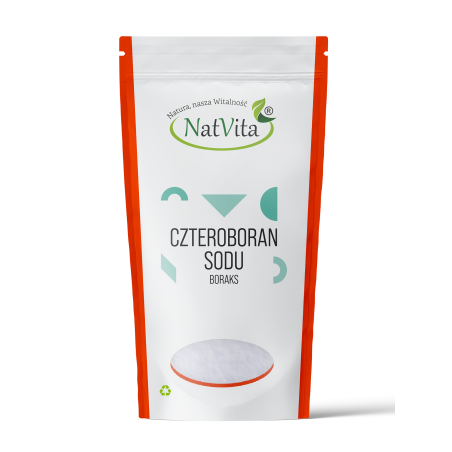

About this borax
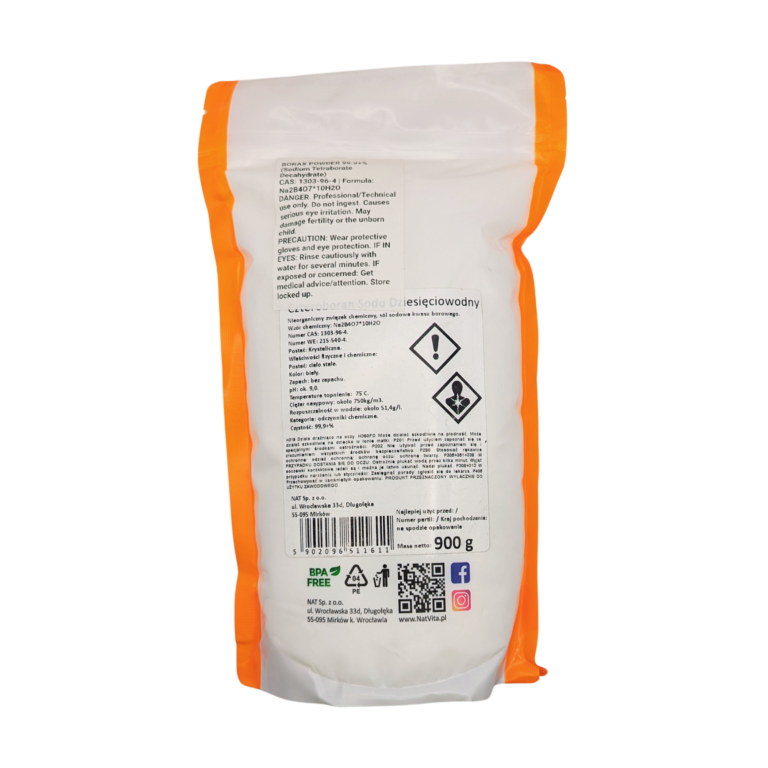
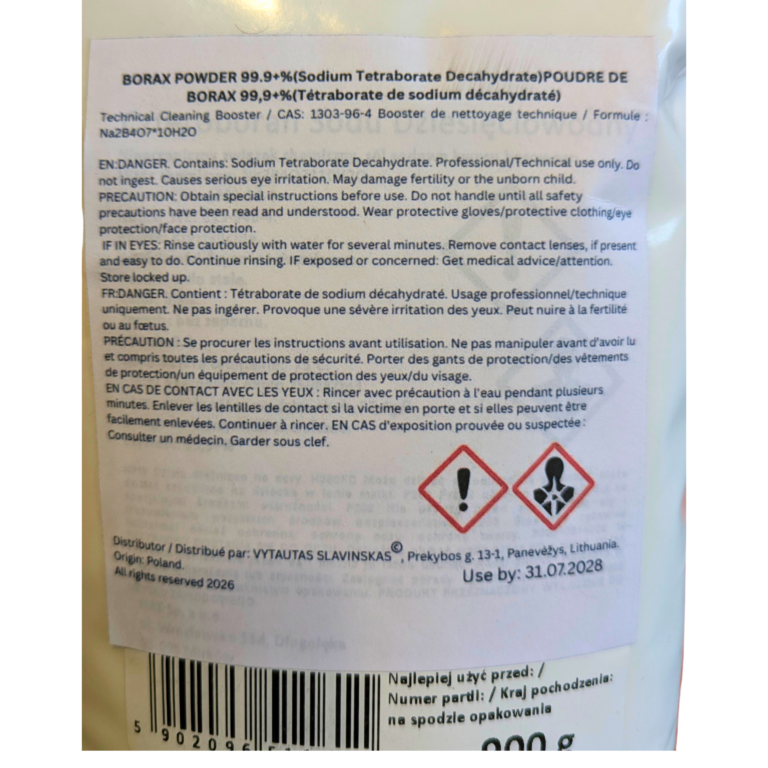
This is borax in its most common commercial form: sodium tetraborate decahydrate (Na2B4O7·10H2O). The crystals are milled to a free-flowing white powder that dissolves readily in warm water (see our borax solubility chart for figures from 0 to 100 °C). A 1% solution sits at roughly pH 9.2, which is what makes borax useful as a buffer, flux and alkaline cleaner.
Typical professional uses
- Jewellery and metalwork: mixed to a paste or fused as a glassy flux for soldering and brazing gold, silver, brass and copper.
- Pottery and enamelling: a low-temperature flux that helps glazes melt and flow (see our guide to borax for pottery glazes and enamels).
- Timber conservation: used by restoration trades in boron wood treatments.
- Laboratory work: preparing borate buffers and as a titration standard.
- Specimen preparation: drying and preserving botanical and taxidermy specimens.
Technical data
| Substance | Disodium tetraborate decahydrate |
|---|---|
| CAS / EC | 1303-96-4 / 215-540-4 |
| Assay | 99.9% |
| Form | White crystalline powder, odourless |
| Molar mass | 381.37 g/mol |
| Pack sizes | 900g (2 lb) · 3kg (6.6 lb) |
| GB CLP | Repr. 1B, H360FD |
Who can buy
Borax is classified in Great Britain as toxic for reproduction (category 1B). We supply it for professional, industrial and laboratory purposes only, not as a household cleaner or for making slime. If you need something for laundry or cleaning at home, choose our borax substitute instead.
Safe handling
Wear gloves and eye protection, avoid creating dust and work in a ventilated area. Store sealed, dry and out of reach of children. Full details are in the Safety Data Sheet included with your order.
Reviews
There are no reviews yet.